
Introduction
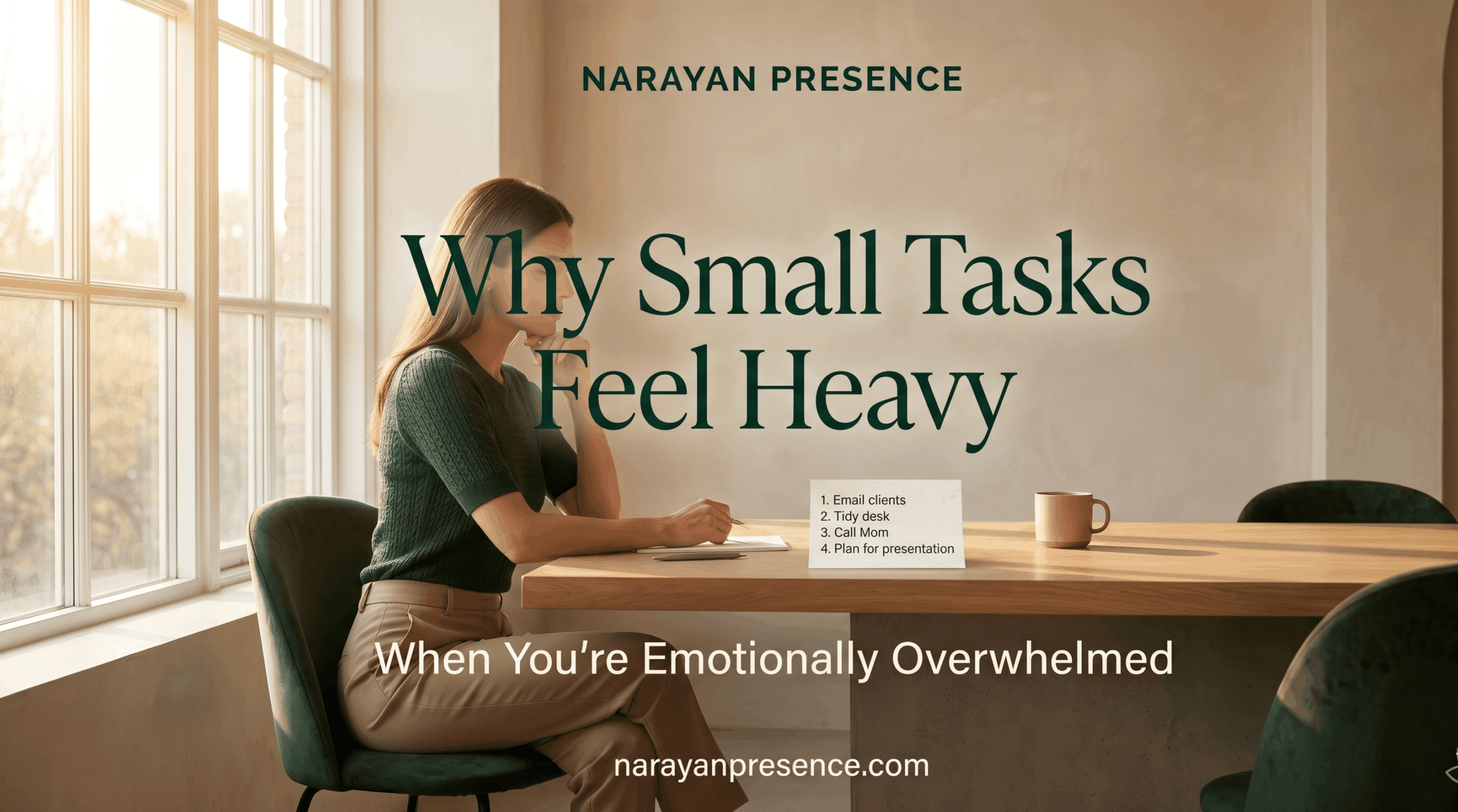
Why Small Tasks Feel Heavy When You’re Emotionally Overwhelmed
Have you ever looked at a simple task—replying to a message, making a phone call, folding laundry, or choosing what to eat—and felt strangely overwhelmed?
The task itself is not difficult.
Yet it feels heavy.
You postpone it.
Think about it repeatedly.
And somehow, even the smallest responsibilities begin feeling larger than they should.
Many people assume this means they are becoming lazy, unmotivated, or disorganized.
In reality, one of the most common causes is emotional overwhelm.
When your mind is carrying too much emotional pressure, even simple tasks can begin feeling exhausting.
What Is Emotional Overwhelm?
Emotional overwhelm happens when your emotional load becomes greater than your current capacity to process it comfortably.
This can happen because of:
- work pressure
- family responsibilities
- financial stress
- relationship concerns
- uncertainty about the future
- prolonged overthinking
- lack of recovery time
Most people do not notice emotional overwhelm immediately.
Instead, they notice the symptoms.
They feel tired.
Distracted.
Irritable.
Unmotivated.
And everyday tasks start feeling heavier than usual.
Your Brain Has Limited Emotional Capacity
Imagine carrying five bags of groceries.
Adding one more bag may not feel like much.
But if you are already carrying twenty bags, even a small additional weight feels difficult.
The same thing happens emotionally.
When your mind is already carrying:
- stress
- worry
- uncertainty
- responsibility
- mental clutter
small tasks no longer feel small.
They become one more thing your nervous system has to manage.
This is why emotionally overwhelmed people often say:
“I know it should be easy. I just can’t do it right now.”
The Hidden Connection Between Emotional Overwhelm and Decision Fatigue
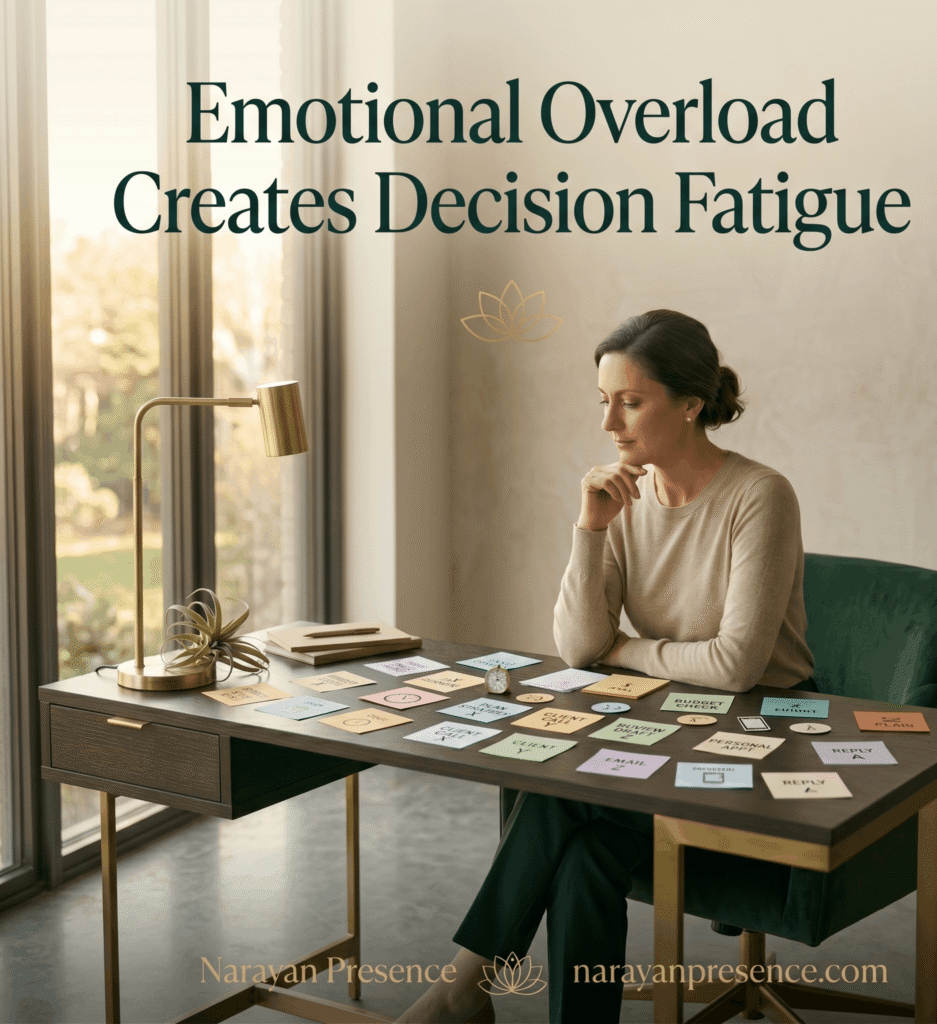
Every task contains decisions.
Reply now or later?
What should I say?
Where should I begin?
Which option is best?
When your emotional energy is low, even small decisions consume more effort.
This is known as decision fatigue.
The more emotionally overloaded you become, the harder it becomes to process choices efficiently.
As a result, tasks feel larger than they really are.
Signs Emotional Overwhelm May Be Affecting You
You may notice:
- procrastinating simple tasks
- avoiding emails or messages
- difficulty concentrating
- feeling mentally tired
- struggling to make decisions
- irritability
- emotional sensitivity
- constantly wanting a break
- difficulty enjoying things you usually enjoy
Many people mistakenly blame themselves.
But often the issue is not motivation.
It is emotional capacity.
Why Overthinking Makes Everything Feel Harder
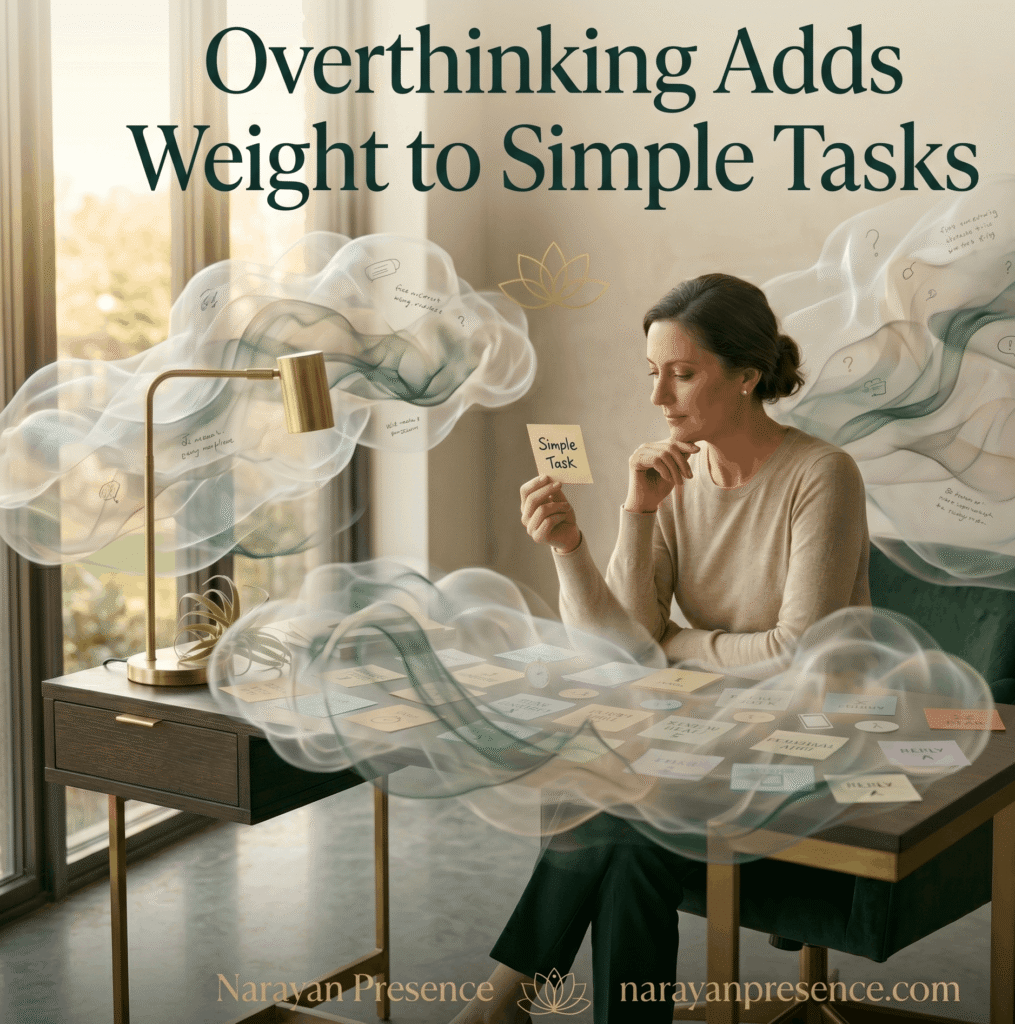
Overthinking creates additional mental work.
Before completing one task, the mind may:
- imagine outcomes
- predict problems
- analyze possibilities
- replay conversations
- seek certainty
This creates emotional effort before any physical effort has even begun.
Over time, small tasks start feeling emotionally expensive.
The task is not the problem.
The mental load attached to it is.
Why Rest Sometimes Doesn’t Solve the Problem
Many people take a day off and expect to feel refreshed.
Yet they still feel overwhelmed.
This happens because emotional recovery is different from physical rest.
Your body may stop working.
Your mind may continue carrying stress.
Recovery requires more than sleep.
It requires reducing emotional pressure.
How to Make Tasks Feel Lighter Again
1. Reduce Mental Clutter
Write down everything you are carrying mentally.
Creating external structure reduces internal pressure.
2. Break Tasks Into Smaller Steps
Focus on the next action.
Not the entire outcome.
3. Reduce Information Overload
Too much input creates mental fatigue.
Limit unnecessary stimulation.
4. Prioritize Recovery
Your nervous system needs recovery just as much as your body.
5. Practice Awareness Instead of Self-Criticism
Awareness creates change.
Self-criticism often increases overwhelm.
A Reflection for Today
If small tasks feel unusually heavy lately, consider this possibility:
Perhaps the task is not the problem.
Perhaps your mind has simply been carrying too much for too long.
Understanding that difference can be the beginning of emotional recovery.
Need Support Creating More Mental Clarity?
Narayan Presence offers calm, non-religious clarity sessions designed for people experiencing emotional overwhelm, overthinking, decision fatigue, and mental exhaustion.
These sessions help you slow down, understand what you are carrying, and reconnect with clearer thinking.
FAQ
Why do small tasks feel overwhelming?
Small tasks often feel overwhelming when emotional stress, mental overload, or decision fatigue reduce your emotional capacity and energy.
Can emotional overwhelm affect productivity?
Yes. Emotional overwhelm can reduce concentration, motivation, energy, and decision-making ability, making everyday tasks feel more difficult.
What are common emotional overwhelm symptoms?
Common symptoms include fatigue, irritability, overthinking, emotional sensitivity, procrastination, and difficulty focusing.
Is emotional overwhelm the same as anxiety?
Not exactly. Emotional overwhelm can contribute to anxiety, but it usually refers to carrying more emotional pressure than your mind can comfortably process.
How can I reduce emotional overwhelm?
Reducing mental clutter, creating recovery time, setting boundaries, journaling, and practicing self-awareness can help reduce overwhelm.
About the Author
Ranu Patel is the founder of Narayan Presence, a non-religious clarity and reflection platform based in Ahmedabad, India. With 16+ years of experience in digital strategy and personal development practices, she helps professionals and overthinkers navigate emotional overwhelm, decision fatigue, stress, and mental clutter through practical awareness tools, Narayan Reiki, NLP, and guided reflection.
Through daily reflections, clarity sessions, and educational content, her work focuses on helping people reconnect with mental clarity, emotional balance, and intentional living.
Learn more about Ranu Patel