
Introduction
Mental Exhaustion vs Laziness: The Difference Nobody Talks About
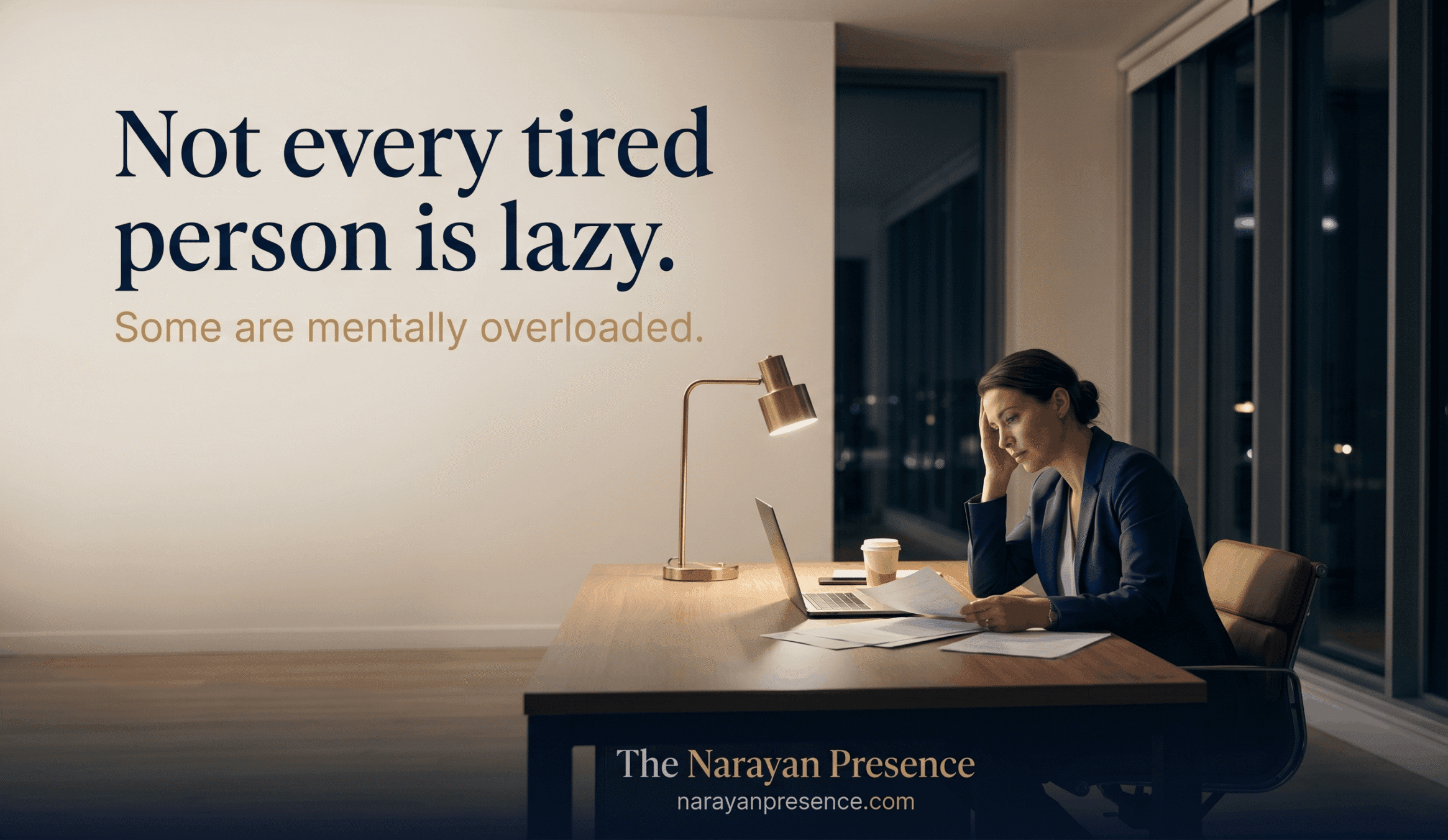
Some people are not lazy.
They are mentally overloaded.
They wake up tired.
They overthink small decisions.
They struggle to focus.
Even simple tasks feel emotionally heavy.
From the outside, they may still look functional.
They go to work.
Reply to messages.
Take care of responsibilities.
Smile during conversations.
But internally, their mind never fully rests.
For many professionals and overthinkers across India, mental exhaustion becomes so normal that they stop recognizing it.
Instead, they blame themselves.
“I should be more productive.”
“Why can’t I focus?”
“Why am I tired all the time?”
“Why does everything feel difficult lately?”
This is where many people confuse mental exhaustion with laziness.
But they are not the same thing.
What Mental Exhaustion Actually Feels Like
Mental exhaustion is not just “being tired.”
It is the feeling of carrying too much internal pressure for too long without enough emotional recovery.
Your body may sit still, but your mind stays active.
You keep:
- thinking
- analyzing
- worrying
- planning
- replaying conversations
- anticipating problems
- carrying emotional tension
Eventually, the nervous system becomes overloaded.
This often leads to:
- emotional numbness
- low motivation
- constant fatigue
- difficulty concentrating
- feeling disconnected
- irritability
- procrastination
- decision fatigue
Many people experiencing mental exhaustion symptoms are not avoiding life.
They are struggling to carry the mental weight of it.
Why Mental Exhaustion Is Often Mistaken for Laziness
Mental exhaustion is invisible.
People can see physical tiredness.
They can see injuries.
They can see sickness.
But they cannot always see emotional overload.
So when someone:
- withdraws
- procrastinates
- loses motivation
- becomes quiet
- avoids decisions
- feels emotionally flat
others may assume:
“They are lazy.”
Sometimes even the person believes it too.
But laziness usually comes from avoidance without emotional overload.
Mental exhaustion comes from carrying too much pressure internally for too long.
This is especially common in:
- professionals
- caregivers
- entrepreneurs
- emotionally responsible people
- overthinkers
- highly self-aware individuals
Many people in Ahmedabad and across India are functioning under silent emotional pressure every day while appearing “fine” externally.
Signs You Are Mentally Exhausted — Not Lazy
Mental exhaustion often shows up quietly.
You may notice:
- feeling tired after simple tasks
- difficulty making decisions
- procrastinating even important things
- emotional numbness
- constant overthinking
- lack of excitement
- feeling mentally “full”
- struggling to relax
- needing isolation to recover
- losing patience quickly
- difficulty focusing
- scrolling endlessly without feeling rested
One of the biggest signs is this:
You rest physically, but your mind still feels tired.
That usually means the nervous system is overloaded, not lazy.
Why Overthinkers Become Mentally Exhausted Faster
Overthinking keeps the brain in continuous activity.
Even during rest, the mind may still be:
- replaying conversations
- imagining future problems
- analyzing situations
- monitoring emotions
- predicting outcomes
- searching for certainty
This constant internal processing consumes emotional energy.
Over time, highly responsible and thoughtful people become mentally exhausted because they rarely feel fully “off.”
Their mind stays in problem-solving mode.
This is why many intelligent people struggle with burnout and overthinking even when they appear successful externally.
The brain was not designed to remain emotionally alert all the time.
High-Functioning Exhaustion Is Real
Some people continue functioning while internally collapsing.
They still:
- meet deadlines
- attend meetings
- take care of others
- fulfill responsibilities
But internally they feel:
- emotionally detached
- mentally overloaded
- exhausted by simple decisions
- unable to feel calm
This is often called high-functioning anxiety or high-functioning exhaustion.
The problem is:
because they still “function,” nobody realizes how overwhelmed they truly feel.
Not even themselves sometimes.
Rest Is Not Something You Must Earn
Many people only allow themselves to rest after reaching complete exhaustion.
But emotional recovery should not be treated like a reward.
You do not need to break down before slowing down.
Rest is not laziness.
Rest is nervous system recovery.
Sometimes the most productive thing you can do is:
- reduce mental stimulation
- pause
- breathe slowly
- sleep properly
- stop forcing yourself
- allow your mind to become quiet again
Your value does not decrease when you rest.
How to Recover From Mental Exhaustion
Recovery does not happen through motivation alone.
It happens through reducing internal overload consistently.
1. Reduce Mental Stimulation
Constant notifications, scrolling, multitasking, and information overload increase nervous system fatigue.
Create quieter moments during the day.
2. Stop Treating Rest Like Guilt
Many people feel guilty when they slow down.
But guilt prevents true recovery.
Rest without mentally punishing yourself.
3. Release Emotional Pressure
Unprocessed emotions create internal tension.
Writing, reflection, calm conversation, and awareness practices help reduce emotional buildup.
4. Create Space Between Thoughts
Not every thought deserves immediate attention.
Awareness creates distance from mental noise.
This is where clarity begins.
5. Allow Imperfection
Perfectionism creates chronic mental pressure.
You do not need to solve everything immediately.
Sometimes “good enough” protects your peace better than endless mental effort.
Mental Exhaustion Changes How Life Feels
When the mind stays overloaded for too long:
- joy decreases
- patience decreases
- motivation decreases
- clarity decreases
Even small tasks begin to feel emotionally heavy.
This is why emotional recovery matters.
Not because you are weak.
But because your nervous system deserves care too.
You Are Not Broken — You Are Overloaded
Many people searching for mental clarity are not broken people.
They are overloaded people.
They have:
- carried too much responsibility
- stayed emotionally alert too long
- ignored exhaustion
- pressured themselves constantly
Eventually the mind slows down because it cannot carry endless pressure forever.
This does not mean you failed.
It means your system needs recovery, awareness, and space to breathe again.
A Gentle Reminder for Today
You do not need to prove your worth through exhaustion.
You are allowed to:
- slow down
- rest
- pause
- say no
- recover emotionally
- stop carrying everything alone
Mental clarity grows faster when pressure decreases.
Need Support Slowing Down an Overloaded Mind?
Narayan Presence offers calm, non-religious clarity sessions for people experiencing overthinking, emotional overwhelm, stress, and mental exhaustion.
These sessions are designed to help you:
- slow down mentally
- reduce emotional pressure
- understand your thought patterns
- reconnect with clarity calmly
You do not need to figure everything out alone.
FAQs
What are the signs of mental exhaustion?
Mental exhaustion often includes emotional fatigue, racing thoughts, low motivation, difficulty concentrating, decision fatigue, irritability, and feeling tired even after resting physically.
Can overthinking cause mental exhaustion?
Yes. Constant overthinking keeps the nervous system emotionally active, which increases mental fatigue, emotional overload, and difficulty relaxing over time.
Why do I feel mentally tired all the time?
You may be carrying chronic stress, emotional pressure, unresolved thoughts, or nervous system overload without enough emotional recovery and rest.
Is mental exhaustion the same as laziness?
No. Laziness is avoidance without emotional overload. Mental exhaustion usually happens when someone has been emotionally and mentally overwhelmed for too long.
How can I recover from emotional exhaustion?
Reducing overstimulation, improving rest, slowing down mentally, journaling, emotional awareness, and creating healthier boundaries can help support recovery from emotional exhaustion
About the Author
Ranu Patel is the founder of Narayan Presence, a non-religious clarity and reflection platform based in Ahmedabad, India. Through practical awareness practices, Narayan Reiki, NLP, and emotional reflection tools, she helps overthinkers reduce mental overwhelm and regain mental clarity.