
Introduction
Have you ever slept for eight hours, taken a day off, or spent a quiet weekend at home—yet still felt completely drained?
You wake up tired.
Simple tasks feel heavy.
Your motivation feels lower than usual.
And no matter how much you rest physically, your energy does not seem to return.
Many people assume this means they need more sleep.
Sometimes they do.
But often the real issue is not physical exhaustion.
It is mental and emotional exhaustion.
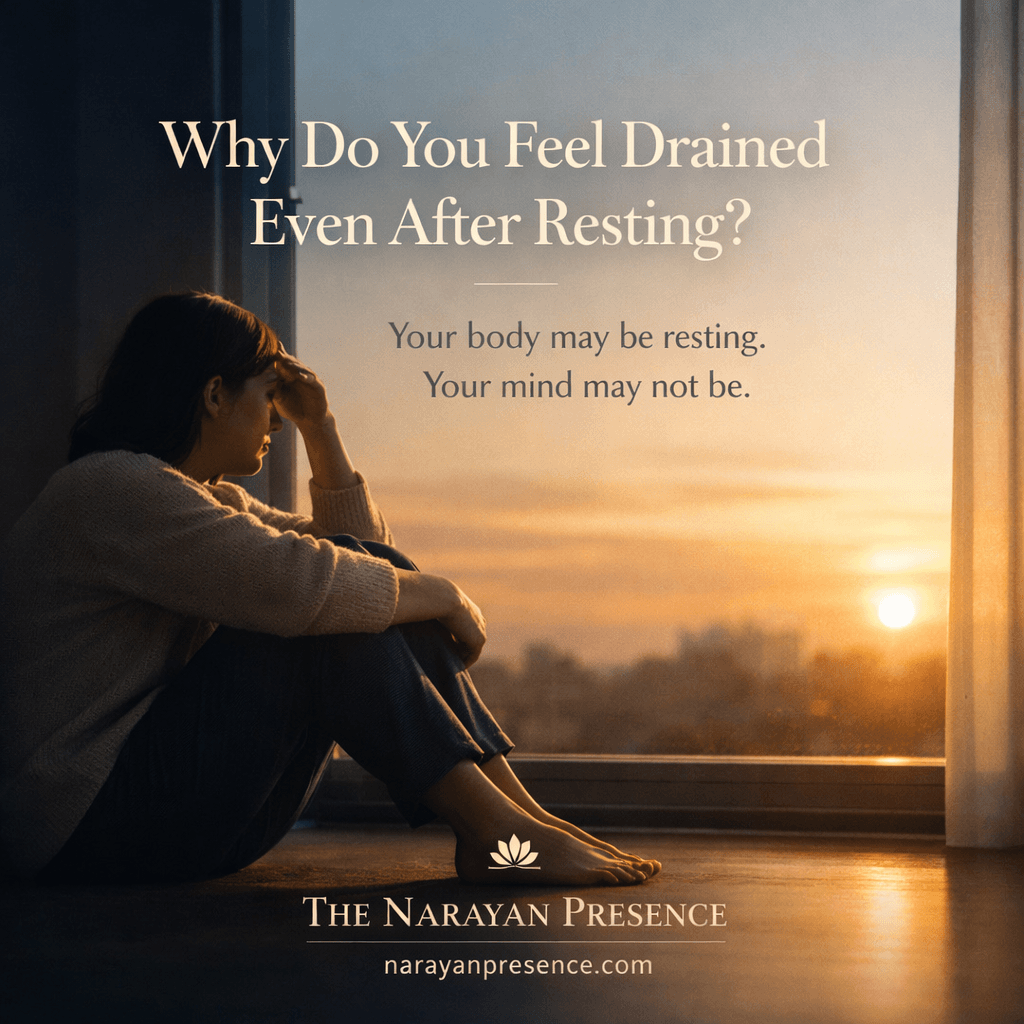
Your body may be resting while your mind continues carrying pressure, responsibility, worry, and unfinished thoughts.
That is why many people feel tired even after resting.
Rest and Recovery Are Not the Same Thing
One of the biggest misconceptions about exhaustion is that sleep automatically fixes it.
Sleep helps physical recovery.
But emotional recovery works differently.
You can sleep for eight hours while your nervous system remains overloaded.
You can take a vacation while still carrying anxiety.
You can sit quietly while your mind continues solving problems.
True recovery happens when both the body and mind feel safe enough to slow down.
Without that, exhaustion often remains.
Signs You Are Emotionally Exhausted
Mental and emotional exhaustion often appear in subtle ways.
You may notice:
- Feeling tired shortly after waking up
- Difficulty concentrating
- Constant overthinking
- Irritability
- Low motivation
- Emotional numbness
- Difficulty making decisions
- Feeling overwhelmed by simple tasks
- Lack of excitement
- Wanting to be alone more often
Many professionals and entrepreneurs experience these symptoms without realizing that emotional overload is the real cause.
Why Overthinking Drains Energy
Every thought requires energy.
Most people underestimate how much energy is consumed by:
- Worrying about the future
- Replaying conversations
- Imagining worst-case scenarios
- Trying to control outcomes
- Mentally solving problems repeatedly
The brain was designed to solve problems.
But when problem-solving becomes constant, it creates mental fatigue.
Many overthinkers are not physically tired.
They are mentally overloaded.
Their mind never fully switches off.
The Hidden Cost of Being Highly Responsible
People who carry responsibility often experience exhaustion differently.
They think ahead.
They care deeply.
They anticipate problems.
They want things to go well.
These are valuable qualities.
But they come with a cost.
Highly responsible people often remain mentally alert long after situations have ended.
Even during rest, their mind may continue reviewing, planning, and preparing.
This constant mental activity slowly drains emotional energy.
Why You Can Feel Drained Even During Calm Periods
Many people believe exhaustion should only happen during busy periods.
But emotional exhaustion often appears after the pressure has passed.
When life finally becomes quieter, the nervous system begins processing everything it was carrying.
This can create feelings of:
- Mental heaviness
- Unexpected fatigue
- Emotional sensitivity
- Lack of motivation
Sometimes exhaustion is not a sign of weakness.
It is a sign that your system is finally acknowledging what it has been carrying.
The Difference Between Laziness and Mental Exhaustion
Laziness is often described as not wanting to do something.
Mental exhaustion feels different.
You want to move forward.
You want to focus.
You want to feel motivated.
But your mind feels overloaded.
Simple decisions become difficult.
Small tasks feel larger than they should.
The issue is not willingness.
The issue is depleted emotional energy.
How to Begin Recovering From Mental Exhaustion
Recovery rarely comes from pushing harder.
Instead, it comes from reducing internal pressure.
1. Reduce Mental Noise
Not every thought needs attention.
Give yourself permission to step away from constant analysis.
2. Create Space for Reflection
Writing thoughts down can reduce mental clutter.
Many people feel lighter simply by putting thoughts on paper.
3. Limit Information Overload
More information does not always create more clarity.
Sometimes it creates confusion.
4. Practice Emotional Awareness
Ask yourself:
“What am I carrying right now?”
Naming emotional pressure often reduces its intensity.
5. Rest Without Guilt
Recovery becomes difficult when rest feels like failure.
Rest is not laziness.
It is maintenance for your nervous system.
Mental Clarity Returns When Pressure Decreases
Many people search for clarity by thinking harder.
But clarity often arrives when pressure softens.
A calmer mind sees more clearly.
A rested nervous system makes better decisions.
A quieter internal environment creates better perspective.
The goal is not to eliminate every problem.
The goal is to stop carrying every problem all at once.
A Gentle Reflection
If you feel drained even after resting, consider this possibility:
Maybe you are not lazy.
Maybe you are not broken.
Maybe your mind has simply been carrying too much for too long.
And maybe what you need most is not more effort.
Maybe you need more recovery.
Need Support Creating Mental Clarity?
At Narayan Presence, we offer calm, non-religious clarity sessions designed for people experiencing overthinking, emotional overwhelm, mental fatigue, and decision pressure.
These sessions provide space to:
- Slow down mentally
- Understand recurring thought patterns
- Reduce emotional overload
- Reconnect with clarity
You do not need to carry everything alone.
FAQs
Why am I tired even after resting?
You may be experiencing mental or emotional exhaustion rather than physical tiredness. Overthinking, stress, emotional pressure, and nervous system overload can leave you feeling drained even after sleeping.
Can overthinking make you feel exhausted?
Yes. Constant mental activity consumes energy and can create emotional fatigue, difficulty concentrating, and ongoing feelings of exhaustion.
What are signs of emotional exhaustion?
Common signs include fatigue, irritability, low motivation, emotional numbness, decision fatigue, difficulty focusing, and feeling overwhelmed by everyday tasks.
How do I recover from mental exhaustion?
Recovery often involves reducing stress, creating space for reflection, improving rest, setting boundaries, and reducing mental overload rather than pushing harder.
Is mental exhaustion the same as burnout?
Not always. Mental exhaustion can be an early sign of burnout, but burnout typically involves longer-term emotional, physical, and professional exhaustion.
About the Author
Ranu Patel is the founder of Narayan Presence, a non-religious clarity and reflection platform based in Ahmedabad, India. Through practical awareness practices, Narayan Reiki, NLP, and reflection tools, she helps overthinkers reduce mental overwhelm and reconnect with mental clarity.