
Introduction
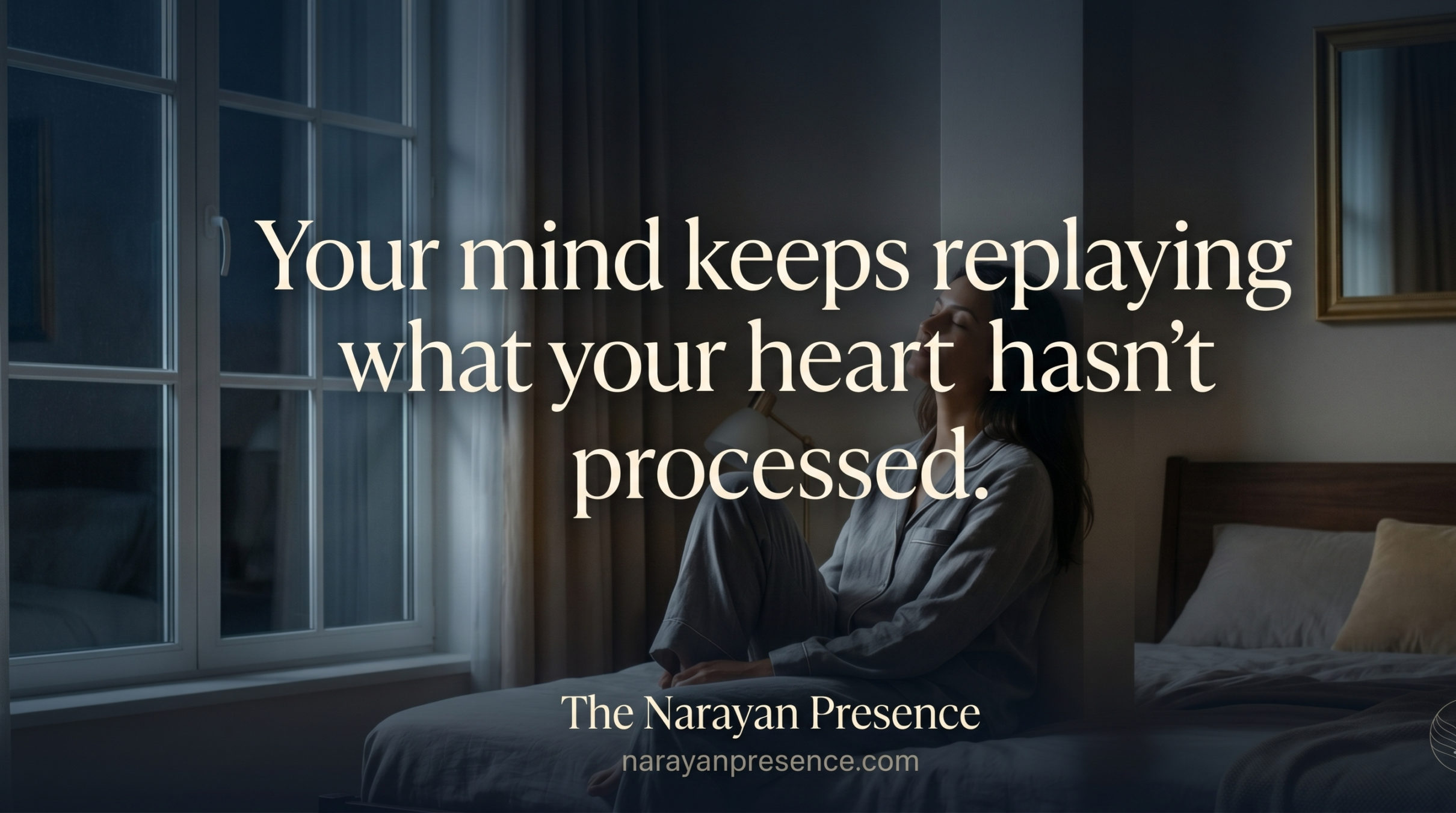
You finally lie down to rest.
The day is over.
The room is quiet.
But your mind starts replaying conversations from earlier.
What you said.
What they meant.
What you should have explained differently.
For many professionals and overthinkers across India, this mental replay becomes strongest at night — when external distractions disappear and internal noise becomes louder.
Sometimes it is one small interaction.
A message.
A meeting.
A facial expression.
A delayed reply.
And suddenly your mind begins analyzing everything again.
If this happens to you often, you are not alone.
And you are not “too sensitive.”
Overthinking conversations is usually not about weakness.
It is about emotional overload, mental pressure, and a nervous system that never fully relaxes.
Why Your Mind Replays Conversations
Your brain is designed to protect you.
One of the ways it tries to do that is by reviewing social experiences to avoid future mistakes.
This becomes stronger in people who:
- overthink often
- carry high responsibility
- fear disappointing others
- struggle with self-criticism
- feel emotionally overwhelmed
The mind believes:
“If I analyze this enough, I can prevent rejection, embarrassment, or conflict.”
But instead of creating safety, constant mental replay creates exhaustion.
Many people replay conversations because they deeply care about:
- being understood
- being respected
- saying the right thing
- avoiding emotional discomfort
This is especially common among professionals, entrepreneurs, and highly responsible individuals in India who constantly manage pressure, expectations, and emotional responsibility.
Why Overthinking Feels Worse at Night
During the day, your attention is occupied.
Work.
Notifications.
Meetings.
Tasks.
People.
But at night, the mind finally has space to process unresolved emotional tension.
That is why racing thoughts often become louder before sleep.
Mental replay becomes stronger when:
- your nervous system is overstimulated
- you are emotionally exhausted
- you suppress emotions during the day
- your brain never gets true rest
- your body is tired but your mind stays alert
Many people assume they have a “thinking problem.”
But often, they actually have an overload problem.
Your mind is carrying too many unfinished thoughts at once.
Replaying Conversations Is Often About Emotional Safety
Most overthinking is not random.
It is protective.
Your brain tries to predict outcomes so you can avoid emotional pain.
You replay conversations because part of your mind is asking:
- “Did I say something wrong?”
- “What if they misunderstood me?”
- “What if they are upset?”
- “What if I embarrassed myself?”
- “What if I lose connection or approval?”
This pattern becomes stronger in people who:
- experienced criticism growing up
- learned to overanalyze emotions
- became responsible too early
- fear conflict
- struggle with uncertainty
Overthinking conversations can temporarily feel like preparation.
But after a certain point, it becomes emotional self-exhaustion.
Signs You Are Emotionally Overloaded
Sometimes the problem is not the conversation itself.
It is the emotional weight your mind is already carrying.
Signs of emotional overload include:
- replaying small interactions repeatedly
- mentally editing conversations afterward
- difficulty relaxing before sleep
- feeling exhausted after social interaction
- fear of saying the wrong thing
- constantly seeking reassurance
- overanalyzing text messages
- difficulty staying present
- mental fatigue even after resting
Many people experiencing replaying conversations anxiety are not weak.
They are mentally overstimulated for too long without enough emotional recovery.
Why Highly Responsible People Overthink More
People who care deeply often think deeply.
Highly responsible individuals tend to:
- anticipate problems
- analyze outcomes
- prepare mentally
- monitor reactions carefully
Over time, this creates chronic mental tension.
The brain stays in “review mode” even when nothing dangerous is happening.
This is why many intelligent, capable, and emotionally aware people still struggle with overthinking at night.
Their mind never fully leaves performance mode.
How to Calm Mental Replay at Night
You do not need to force your thoughts away.
You need to create enough internal safety for your mind to slow down naturally.
Here are practical ways to calm replaying conversations anxiety:
1. Stop Trying to Solve Every Thought
Not every thought needs analysis.
Some thoughts are simply emotional residue from a long day.
Awareness helps more than endless mental problem-solving.
2. Write Down Unfinished Thoughts
Journaling helps the brain release mental loops.
Try writing:
- what happened
- how you felt
- what you fear
- what you actually know is true
This helps separate facts from anxious assumptions.
3. Reduce Self-Judgment
Many people replay conversations because they are harsh toward themselves.
Speak to yourself with the same understanding you would offer someone else.
Perfect communication does not exist.
4. Calm the Body First
An overstimulated nervous system creates an overstimulated mind.
Simple grounding practices help:
- slow breathing
- reducing screen time
- stretching
- soft music
- quiet sitting
- mindful awareness
The goal is not perfection.
The goal is reducing internal pressure.
5. Accept That Not Everything Can Be Controlled
Some conversations will feel incomplete.
Some people may misunderstand you.
Some moments may stay unresolved.
Trying to mentally control every outcome creates deeper exhaustion.
Clarity grows when the mind stops fighting every uncertainty.
You Do Not Need Perfect Conversations to Be Accepted
Many people secretly believe:
“If I say everything perfectly, I will finally feel safe.”
But emotional peace does not come from perfect conversations.
It comes from learning that your worth does not depend on flawless performance.
You are allowed to:
- pause
- make mistakes
- misunderstand sometimes
- learn as you go
- stop carrying every interaction forever
Your mind deserves rest too.
A Small Reflection Before Sleep
Tonight, before replaying another conversation, ask yourself:
“Am I searching for clarity… or trying to escape uncertainty?”
Sometimes awareness itself softens the mental noise.
Not every thought needs another hour of analysis.
Sometimes your mind simply needs permission to rest.
Need Support Quieting an Overactive Mind?
If overthinking conversations, stress, or emotional exhaustion are affecting your peace, Narayan Presence offers guided clarity sessions designed to help you pause, reflect, and reconnect with calmer thinking.
These sessions are:
- non-religious
- confidential
- practical
- emotionally grounded
You do not need to figure everything out alone.
FAQs
Why do I replay conversations in my head at night?
Replaying conversations is often connected to anxiety, emotional overload, perfectionism, or fear of judgment. At night, fewer distractions make unresolved thoughts feel louder and more emotionally intense.
Is replaying conversations a form of anxiety?
Yes. Constantly replaying conversations can be linked to overthinking, social anxiety, emotional stress, or a nervous system that struggles to relax after emotionally stimulating situations.
Why does overthinking feel stronger before sleep?
Overthinking becomes stronger at night because the brain finally has space to process unresolved emotions, stress, and mental pressure from the day.
How can I stop mentally replaying conversations?
Grounding practices, journaling, reducing self-criticism, and calming the nervous system before bed can help reduce mental replay and emotional overstimulation.
Can emotional exhaustion cause racing thoughts?
Yes. Emotional exhaustion often increases racing thoughts, mental replay, and difficulty relaxing because the mind stays in a heightened state of alertness.
About the Author
Ranu Patel is the founder of Narayan Presence, a non-religious clarity and reflection platform based in Ahmedabad, India. Through practical awareness practices, Narayan Reiki, NLP, and emotional reflection tools, she helps overthinkers reduce mental overwhelm and regain mental clarity.