
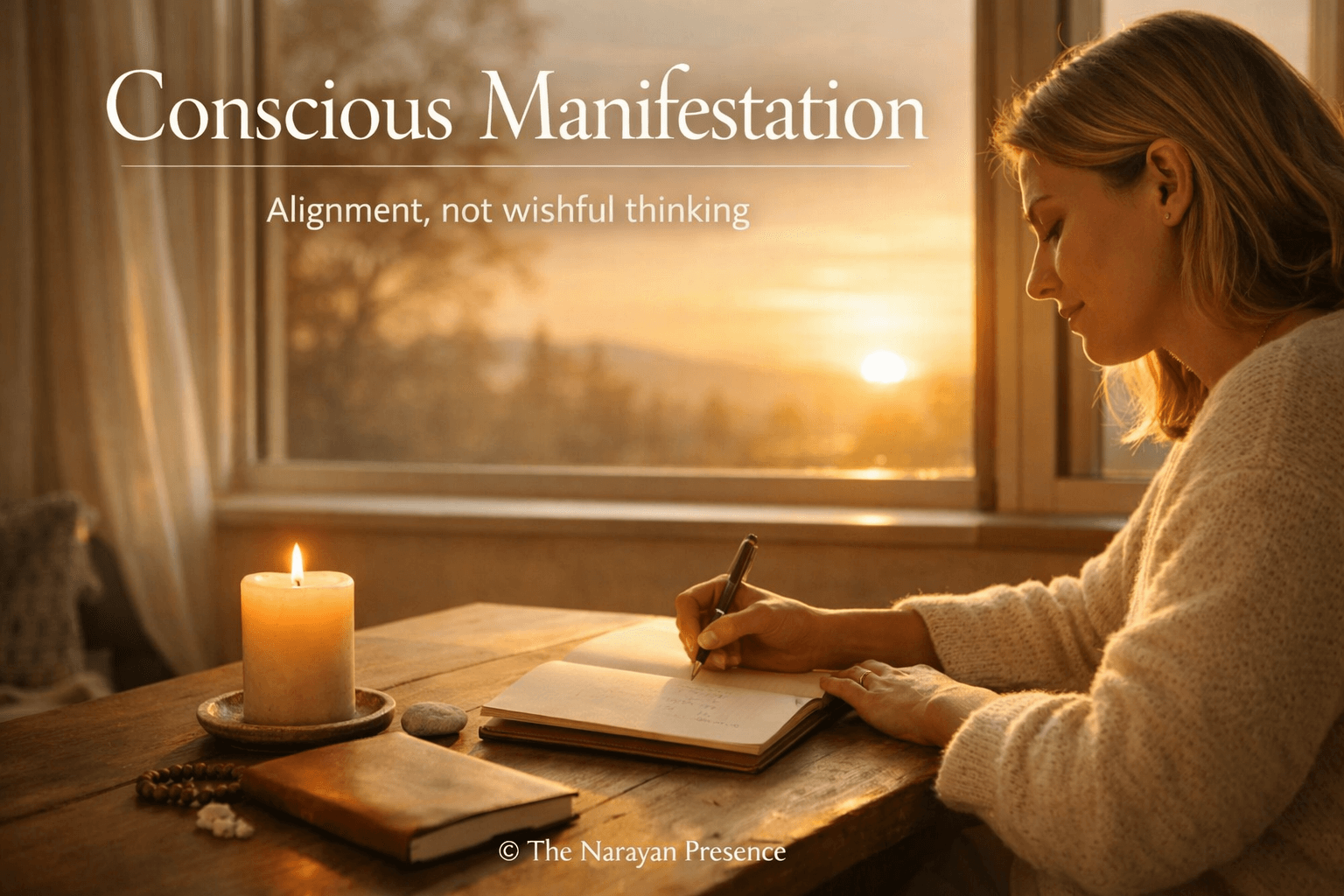
Introduction
The idea of manifestation has become widely popular in recent years. Many people believe that simply wishing for something strongly enough will bring it into reality.
However, true manifestation is not about wishful thinking. It is about developing clarity, awareness, and alignment between thoughts, actions, and intentions.
Conscious manifestation is a process of understanding your values, focusing your attention, and taking meaningful steps toward growth.
Rather than hoping for outcomes to appear magically, this approach encourages responsibility and self-awareness.
What Is Conscious Manifestation?
Conscious manifestation refers to the practice of aligning thoughts, emotions, and actions with clear intentions.
It is rooted in awareness rather than fantasy.
Instead of asking, “What do I want to receive?” conscious manifestation asks a deeper question:
“How can I align my mindset and actions with the life I want to create?”
This approach emphasizes personal responsibility, patience, and consistent effort.
Manifestation becomes less about control and more about alignment.
What Is Wishful Thinking?
Wishful thinking occurs when people hope for outcomes without taking meaningful steps toward change.
It often involves imagining success or happiness without considering the actions required to reach those outcomes.
While optimism can be helpful, wishful thinking alone rarely produces lasting change.
Without awareness and effort, hopes remain ideas rather than experiences.
Understanding this difference helps prevent frustration and unrealistic expectations.
Key Differences Between Manifestation and Wishful Thinking
Intention vs Fantasy
Conscious manifestation begins with clear intention. Wishful thinking often begins with vague desires.
Intentions provide direction, while fantasies remain uncertain.
Action vs Passive Expectation
Manifestation encourages aligned action. People reflect on their values and make decisions that move them closer to meaningful goals.
Wishful thinking waits for results without change.
Awareness vs Escapism
Manifestation requires self-reflection and awareness of personal patterns.
Wishful thinking sometimes avoids uncomfortable truths by imagining ideal outcomes.
The Role of Gratitude in Manifestation
Gratitude is one of the most powerful elements in conscious manifestation.
When individuals regularly recognize what they appreciate, they naturally develop a mindset of abundance rather than scarcity.
This shift influences how decisions are made.
Instead of focusing on what is missing, gratitude helps people notice opportunities and possibilities already present in their lives.
Over time this mindset strengthens emotional clarity and encourages positive action.
How Reflection Supports Manifestation
Reflection is another essential practice in conscious manifestation.
Through spiritual reflection, individuals examine their experiences, motivations, and choices.
Reflection allows people to ask questions such as:
-
What do I truly value?
-
What habits support my growth?
-
What patterns may be holding me back?
By understanding these patterns, people can align their actions more intentionally with their goals.
This alignment is what transforms ideas into meaningful progress.
Simple Practices for Conscious Manifestation
Developing conscious manifestation habits does not require complicated rituals.
Here are simple practices that support alignment.
1. Clarify Your Intention
Write down what matters most to you and why.
2. Practice Gratitude Daily
Recognizing positive experiences helps shift the mind toward abundance.
3. Reflect on Your Choices
Ask yourself whether your daily actions support your long-term intentions.
4. Take Small Consistent Steps
Meaningful change happens gradually through consistent effort.
Why Conscious Manifestation Matters
When manifestation is practiced responsibly, it encourages personal growth rather than unrealistic expectations.
It teaches patience, self-awareness, and thoughtful action.
People begin to see that their mindset influences how they interpret experiences and opportunities.
Instead of chasing quick results, conscious manifestation supports long-term clarity and meaningful change.
Conclusion
Manifestation is often misunderstood as wishful thinking, but conscious manifestation is much deeper than that.
It is a practice of aligning intention, awareness, gratitude, and action.
By cultivating reflection and mindful awareness, individuals can move toward their goals with clarity and purpose.
Rather than waiting for life to change, conscious manifestation encourages us to participate actively in our own growth.
FAQs
What is conscious manifestation?
Conscious manifestation is the practice of aligning thoughts, emotions, and actions with clear intentions. It focuses on awareness, gratitude, and meaningful effort rather than simply wishing for outcomes.
Is manifestation the same as the law of attraction?
Manifestation and the law of attraction are related concepts. Both emphasize the influence of mindset and intention, but conscious manifestation also highlights personal responsibility and aligned action.
Why doesn’t wishful thinking work?
Wishful thinking often relies on hope without action. Without reflection, planning, and effort, desires remain ideas rather than achievable goals.
How can I practice manifestation responsibly?
Responsible manifestation involves setting clear intentions, practicing gratitude, reflecting on personal habits, and taking consistent steps toward meaningful goals.